


In just 24-36 sessions, depending on the intensity of treatment and the stages of development of the disease, you will get rid of pain and discomfort in joints during exercise, normalize sleep and live life to the fullest.
It is important to understand
If pain in the joints is detected during exercise, it is necessary to select an individual set of therapeutic exercises, study the technique of performing them, and exclude those exercises that have contraindications.
With this diagnosis, it is important to regularly attend treatment sessions, undergo a full course of treatment in a specialized center, and in the future you need to maintain your health yourself in a preventive mode.
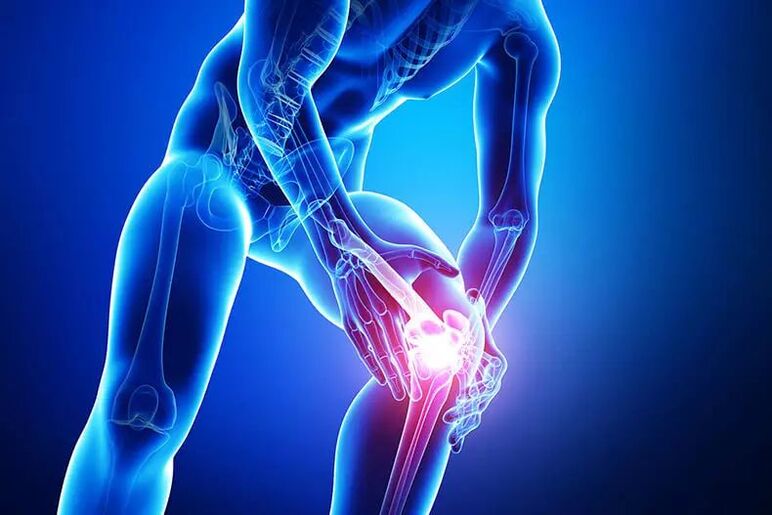
A joint is a connection between two or more bones.The main quality of "design" is mobility.
It is because of this ability that our body can perform important activities and move in space.
There are more than 180 joints in the human body.Due to the peculiarities of the anatomical structure, the maximum load falls on the joints of the musculoskeletal system.
Joint pain is common during exercise.It is important to find out the cause of the symptom and know about measures to prevent this condition.
cause pain
Joints allow you to perform basic functions - they provide the necessary position of the body, promote movement of its parts and movement in space.
The dynamic connection of the bones resembles a regular hinge.It includes three elements:
- The ends of bones that join, or articular surfaces;
- joint capsule;
- The articular cavity contains a lubricating fluid (called synovial).
Joint pain is common after physical activity.Any stress - heavy physical labor, regular sports or overweight negatively affects the structure of the joint elements, deforming and gradually destroying them.
The amount of synovial fluid in the joint cavity begins to decrease.While walking, there is harsh friction on the replaced parts, which is also accompanied by pain.
Physical activity and its effects on joints
To avoid joint pain after physical activity, before choosing a suitable sport, you should check the condition of the body, including the musculoskeletal system.
For amateur athletes, the main goal of training should be to maintain good physical shape, improve health and receive only positive emotions.
To improve the condition of the joints and restore their nutrition, the doctor may suggest starting swimming, yoga and wushu gymnastics.
Short, quiet jogging, Nordic walking, cycling and using an exercise bike help strengthen the musculoskeletal system.As a result of exercise, muscles become stronger and ligaments become flexible.
If a person prefers strength sports - for example, weightlifting, then there is a real risk of appearance and persistence of pain in the joints after exercise.
Acute, constant or continuously increasing impact on the joint parts provokes the destruction of osteochondral tissues, displacement and deformation of the bones.
Often, athletes experience problems in the joints of the lower extremities, shoulder girdle and spine.
Symptoms of pain during exercise
To accurately determine why joints hurt during exercise, it is important to identify and analyze the main symptoms.The type of injury or the presence of a disease can be determined by particular combinations of signs.
After intense physical activity, partial or complete dislocation of the joint may occur.It can be diagnosed by the symptoms:
- presence of severe joint deformity;
- The occurrence of strong, burning pain when performing any movement of the limb;
- There is severe swelling of the surrounding tissues;
- The presence of injuries (appear when ligaments are torn);
- Local increase in temperature in the area of damage.
The combination of signs will help determine damage to the knee meniscus.This injury often occurs with professional athletes, in most cases it is associated with increased physical stress on the limb.
Symptoms include:
- Forced position of the leg in a bent position;
- The presence and persistence of intense pain;
- Rapid formation of swelling.
An inflammatory process may develop in the joint after stress.It can be identified by the following characteristics:
- Pain may be felt with movement and at rest;
- The pain is localized near the joint and spreads up or down the limb;
- When moving, sounds appear - creaking, clicking, grinding;
- There is swelling and redness of the skin around the "problem" area.
Types of pain during exercise
When the joints experience a constant, significant load and pain appears, its description may vary.
By nature it can be painful, pressing, cutting.Often sufferers point to the nature of its eruption.
Sensations may have different localization.They spread to the side, above or below the joint.
Manifestations vary in intensity;Adjectives are used to define it – pronounced or weak.Joint pain may occur periodically or continuously.
Main causes of pain
Increased physical activity can cause pain in many "painful" joints.
Pain in the wrists occurs when the tendons and ligaments of the wrist joint become damaged.The provoking factor is strength exercises with the hands or repetitive monotonous movements.The joints of the fingers and wrists are often susceptible to arthrosis.
Pain in the elbow joint is caused by pathology - osteochondrosis (thoracic and cervical spine), sprained ligaments, pinching of the nerve in the elbow area, development of arthrosis, arthritis, epicondylitis, bursitis.
After changes in the meniscus, its displacement, compression of the lumbar nerves, nerve endings in the knee area, when the intra-articular ligaments and cartilaginous tissue are sprained, pain in the knee joint occurs.Pain occurs with the progression of arthrosis and coxarthrosis.
In most cases, the ankle suffers from a tendon or ligament tear, dislocation, or fracture.Similar problems are specific to the shoulder joint.
How to protect yourself from injury?
To prevent joint pain after physical activity, it is important to warm up before each session.Professional trainers recommend "stretching" the body from top to bottom.
To do this, you should make leisurely rotational movements with your head, bent, then straightened arms, hands and torso 10 times.The warm-up should be continued with partial squats, alternating legs, to activate the knee joint.
You should start playing the game only under the supervision of a professional guru.It is important to calculate the load correctly.The number of repetitions of any exercise increases gradually.
When performing them, pain should not appear;Fatigue can only be pleasant.If you have any unwanted symptoms, it is better to consult a doctor.
How to prevent the development of joint pain after training?
To prevent pain in the joints after playing sports, it is important to follow the basic rule - the load should be calculated by the trainer taking into account the age and health condition of the athlete.
The appearance of any discomfort and pain, deterioration in well-being is a sufficient reason to temporarily or permanently stop classes and seek medical help.
Prevention of joint pain during physical activity
When joints hurt after exercise, doctors recommend following the following tips:
- Always do a warm-up before the main exercise, which is necessary to "warm up" the muscles and prepare the joints for strength exercises;
- If you get an injury, it is important to immediately stop exercising, take a break until complete recovery, and exclude dangerous exercises from the complex.
Special nutrition is used to improve the condition of the joints and reduce pain in them.The athlete's diet should include cabbage, carrots, broccoli, legumes, seafood, fish, seaweed, lean meat (preferably with a lot of cartilage), natural milk and sour milk, egg yolks, fruits, berries, nuts, herbs, bran (from wheat).Alcoholic beverages are not allowed.
With increased physical activity, it is necessary to use multivitamin and mineral preparations.These should contain beta-carotene, vitamin C, E, B12, iron, selenium, calcium, phosphorus, copper.
How is the treatment done?
Doctor's consultation: medical history, myofascial diagnostics, functional diagnostics.
How does it work?
History collection - analysis of the disease, limitations and contraindications are identified, explanation of the principles of kinesitherapy, features of the recovery period.
Myofascial diagnostics is a manual diagnostics method in which the doctor assesses the range of joint movements, determines painful stiffness, swelling, hypo- or hypertonicity of the muscles and other changes.
Functional diagnosis (carried out in the rehabilitation room) - the doctor explains how to perform certain exercises on the equipment and observes: how the patient performs them, with what speed he can work, what movements cause pain, with what weight the patient can work, how the cardiovascular system reacts.Problem areas have been identified.The data has been entered into the card.The accents are set.
Based on the results of preliminary examination and functional diagnosis by a doctor, an initial individual treatment program is drawn up.
It is advisable to have with you:
- For pain in the spine - MRI or CT (magnetic resonance or computed tomography) of the problem area;
- For joint pain – X-ray;
- In the presence of concomitant diseases - extract from the medical history or outpatient card;
- Casual (sports) clothes and shoes
At the beginning of the treatment cycle, the doctor and the patient create a treatment plan, which includes the date and time of the treatment sessions, follow-up visits to the doctor (usually 2-3 times a week).
The basis of the treatment process are treatment sessions using simulators in the rehabilitation room and sessions in the gym.
Rehabilitation simulators allow you to accurately dose the load on individual muscle groups, providing an adequate regime of physical activity.The treatment program is compiled by the doctor individually for each patient, taking into account the characteristics of the body.Supervision is done by qualified trainers.At all stages of recovery, it is important to observe the correct pace and breathing technique, know the parameters of your weight when working on exercise machines, adhere to the prescribed treatment regimen and follow the recommendations of specialists.
Joint gymnastics sessions help to restore visual coordination, improve the mobility of joints and the elasticity (flexibility) of the spine and are an excellent preventive system for self-use.
Each treatment cycle consists of 12 sessions.Each lesson is supervised by an instructor.The duration of one treatment session is from 40 minutes to 1.5 hours.The instructor prepares a program on the day of the class, taking into account concomitant diseases and the patient's condition.Teaches the technique of performing exercises and monitors correct execution.At every sixth lesson, a second consultation with the doctor is held, changes and additions are made to the program depending on the dynamics.
How many cycles will it take?- individually for everyone
Important to know:
- How long have you had the problem (stage of disease)
- How is your body prepared for physical activity (do you do gymnastics or any kind of sport)... -
Important!What results do you want to achieve?
If the disease is in the early stages and the body is ready, one treatment cycle is sufficient.(Example - young people of 20-30 years who play sports. We focus their attention on the technique of performing exercises, breathing, stretching, excluding "wrong" exercises that are harmful to problem areas. Such patients undergo training, acquire the skill of "taking care of their body", receive recommendations in case of exacerbations and continue to do the exercises themselves).
If the problem has been there for a long time, you do not do gymnastics, or you have concomitant diseases, separate time will be required.
- Remove suffering?- One or two cycles are enough,
- Restore function?
- walking without stopping (climbing stairs),
- to bend, to do something without effort
- Being immobile for long periods of time while traveling (on an airplane, in a car...)
- make amends?Help?Don't make it worse?
- Three or more treatment cycles may be required...
Every organism is individual, and the program is individual for each patient.